Event
The art of japanese calligraphy (shodō) and ink painting (sumi)
Saturday, 10 October 2026 · 14:00–17:00
Sumi-e · The Chrysanthemum Discover the way of the brush through Japanese calligraphy and ink painting — and create the chrysanthemum, a symbol of longevity, purity and renewal.
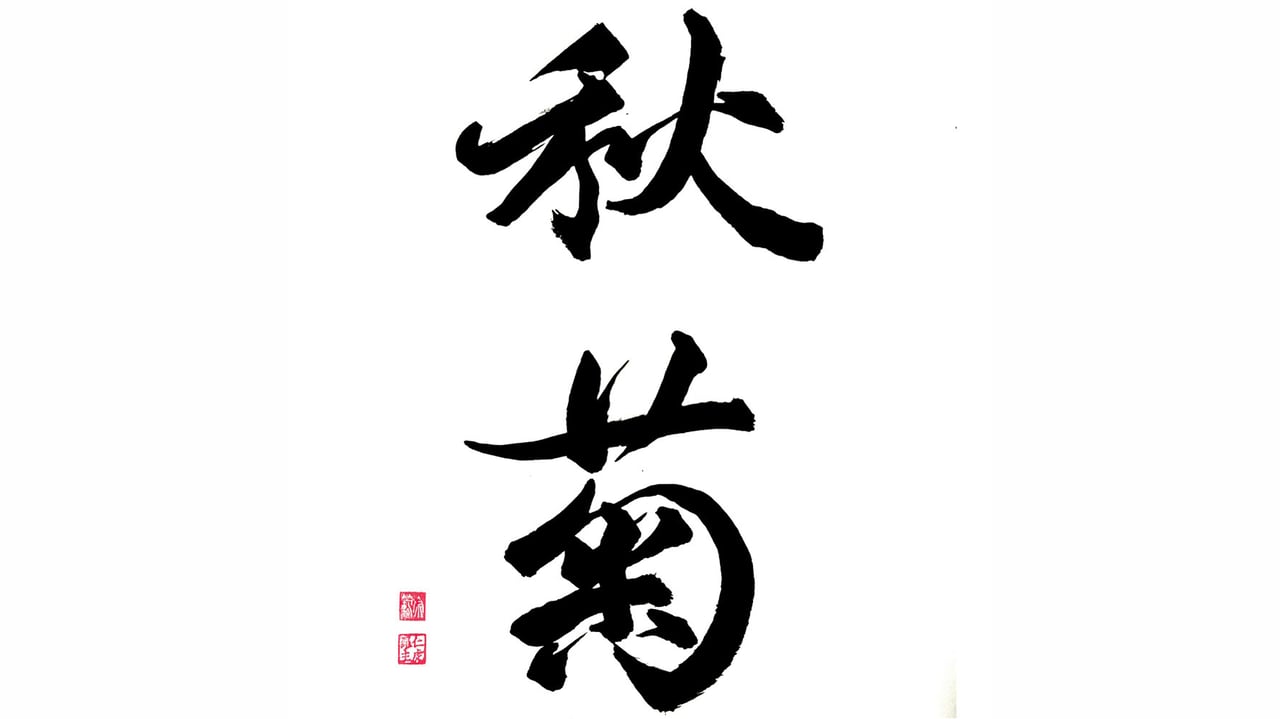
Japanese Calligraphy: The Way of the Brush
The traditional name for Japanese calligraphy is “the way of writing” (shodō 書道), or, as it is often referred to, “the way of the brush.”
Practising Japanese calligraphy in this way is not merely about mastering the art of writing characters beautifully. Rather, it is a clean, austere form of practice, free from all external trappings and the desire to please—an intimate and deeply personal endeavour.
Its primary aim is not to create aesthetic beauty in the everyday sense, but to reveal the practitioner’s clear, deep state of consciousness.
Both Japanese calligraphy and ink painting are born of emptiness. The “emptiness” of the snow-white paper is just as important as the black marks the brush leaves on it. Harmony and elegance are inherent in every single stroke, reflecting the state of mind of the calligrapher executing the calligraphy.
Sumi-e and Zen Buddhism
The painting style or technique known as sumi-e 墨絵 is a wonderful artistic tradition not only in Japan, but also throughout the Far East. Like many Japanese art forms, it is deeply rooted in the philosophy of Zen Buddhism 禅. These art forms include:
- fine and applied arts,
- martial arts, or budō 武道,
- the tea ceremony, or chadō 茶道,
- ikebana 生け花,
- and calligraphy.
This does not mean that sumi-e is influenced by religious themes, but rather refers to the master’s approach to creation.
The artist’s goal is not merely to create an artwork, but to become one with the subject of their creation during the creative process.
This requires a great deal of practice and concentration, ultimately producing an aesthetically pleasing result that penetrates the essence of its subject with effortless simplicity.
Brushwork as Spiritual Practice
According to traditional thinking, the basic techniques of sumi-e can best be learned through practising calligraphy. This allows the practitioner to concentrate on brushwork without having to worry about colours or composition, because brushstrokes are the most important aspect of the art of sumi-e.
The moment the brush touches the paper, the mark it leaves cannot be corrected. The artist must therefore imagine the entire picture in their mind before touching the paper with the brush.
This requires:
- attention,
- control,
- spontaneity,
- and a kind of inner harmony that guides the hand and leads the brush towards the perfect expression of the artist’s feelings.
Sumi-e is traditionally considered a spiritual practice, so meditation and planning are essential to it. Grinding the ink takes a long time, allowing the artist to enter a meditative state even before creation and practice begin.
The Relationship Between Image and Inscription
There is one more way to approach the relationship between calligraphy and ink painting: through the connection between the image and the text or inscription placed upon it.
The inscriptions on the images always have calligraphic qualities.
The Chrysanthemum in Japanese Culture
The majestic chrysanthemum is a symbol of long life, rejuvenation, and—due to its round shape—family unity.
The chrysanthemum appears as a symbol in many forms throughout India and East Asia, including China, Korea, and Japan. It is known as a symbol of tranquillity and long life—or even eternal life. The yellow variety is revered as a sunflower in many regions and is believed to prolong life.
The chrysanthemum has also become a symbol of autumn because of its bright colours and long flowering period, which lasts until the first frosts.
The flower remains prominent in the cultural consciousness of the Japanese people, appearing in:
- textile art,
- ceramics,
- lacquerware,
- carvings,
- sumi-e paintings,
- and many other forms of art.
The chrysanthemum can also be found on the back of the 50-yen coin, on passports, on government seals, and throughout Japan.
The chrysanthemum is traditionally associated with:
- royal dignity and nobility,
- purity and good fortune,
- long life and rejuvenation,
- autumn and harvest,
- and family unity.
The Chrysanthemum Festival
According to tradition, the Kiku no Sekku 菊の節句, or Chrysanthemum Festival, is held annually on September 9. It is one of the five sacred and ancient festivals of Japan.
The festival is celebrated in both Shintō 神道 shrines and Buddhist monasteries in the hope of a long life. Among the many foods and drinks consumed on this day are:
- sake 酒,
- kuri-gohan 栗ご飯,
- and kuri-mochi 栗餅.
The latter two are chestnut rice dishes.
The Imperial Emblem
The chrysanthemum, or kiku 菊, is an important theme and symbol in sumi-e. Since the Kamakura period 鎌倉時代 (1185–1333), it has been the national symbol of Japan and the emblem of the imperial family.
Emperor Go-Toba and the Sixteen-Petal Chrysanthemum
It was Emperor Go-Toba 後鳥羽天皇 (1180–1239) who first used the chrysanthemum as a symbol of power.
A passionate art lover and talented poet, calligrapher, and swordsman, Emperor Go-Toba was completely infatuated with the beauty of the flower. For him, it symbolised:
- refinement and perseverance,
- the power of the emperor,
- the continuity of the imperial family,
- and eternal imperial rule.
The finest swords made by his best swordsmiths were also marked with a sixteen-petal chrysanthemum. In this way, the flower gradually came to symbolise both the spirit and strength of the katana 刀—the Japanese sword—and the elegance of nature.